
The complete guide
Choosing and hanging a string curtain door
What it is for
Some doorways never had a door and never needed one. The opening between a kitchen and a hallway. A back door propped open all summer. An archway that wants defining without closing off.
A string curtain handles all of those. You walk through it, it falls back behind you, and the air keeps moving. It's the least fussy way to put something across an opening.
Why the weight is the whole story
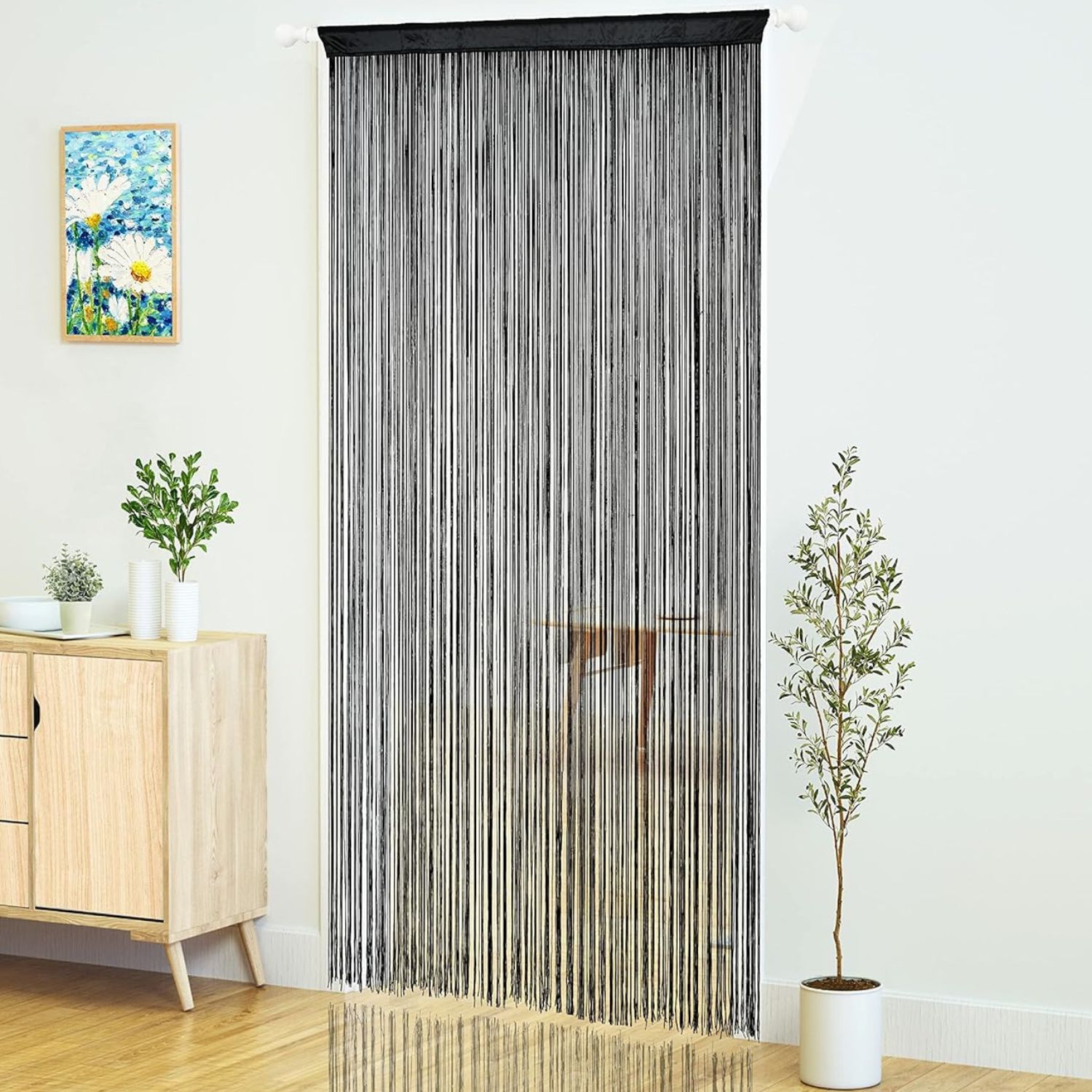
This curtain is 590 g of polyester woven at 15 strings to the inch, and that weight is the difference between a good string curtain and a bad one.
Thin, light string curtains drift in any draught, wrap around each other and end up looking like a bad wig within a fortnight. Heavier strings hang straight down, settle quickly after someone walks through, and stay separated. It also feels better on the way past, which sounds like a small thing until you use one every day.
Hanging it
The top is a slot pocket rather than hooks or eyelets, so it slides onto a rod, a pole or a length of wire. Rods are not included, on the assumption you already have something or will pick a rod to suit the opening.
For a doorway, a tension rod inside the frame is usually the answer. It needs no screws, so it suits a rented flat, and it comes down as easily as it went up.
Cutting it to size
The curtain is 280 cm tall as supplied, and very few doorways are. Trimming is normal rather than a compromise.
Hang it first, then cut. Mark where you want the hem, take it down, and cut the strings straight across with sharp scissors. The weave holds the cut ends, so there is no hemming to do. You can narrow the width the same way by cutting strings off the side.
For an opening wider than 100 cm, hang two curtains on the same rod with a few centimetres of overlap in the middle. Any more overlap than that and the middle feels heavy to walk through.
String or chain
Both do the same job in different registers. The chain curtain is aluminium, much heavier, and settles almost instantly in a doorway with constant traffic, which is why they turn up in cafes and commercial kitchens. It also costs a good deal more.
The string curtain is softer, effectively silent, and far cheaper. In a house, that is usually the better trade.
Looking after it
Shake it out when it needs it, or wipe it down. If it needs a proper wash, take it off the rod, hand wash it gently and hang it back up wet so the strings dry straight. Do not wring it, or you will spend an evening untangling it.