
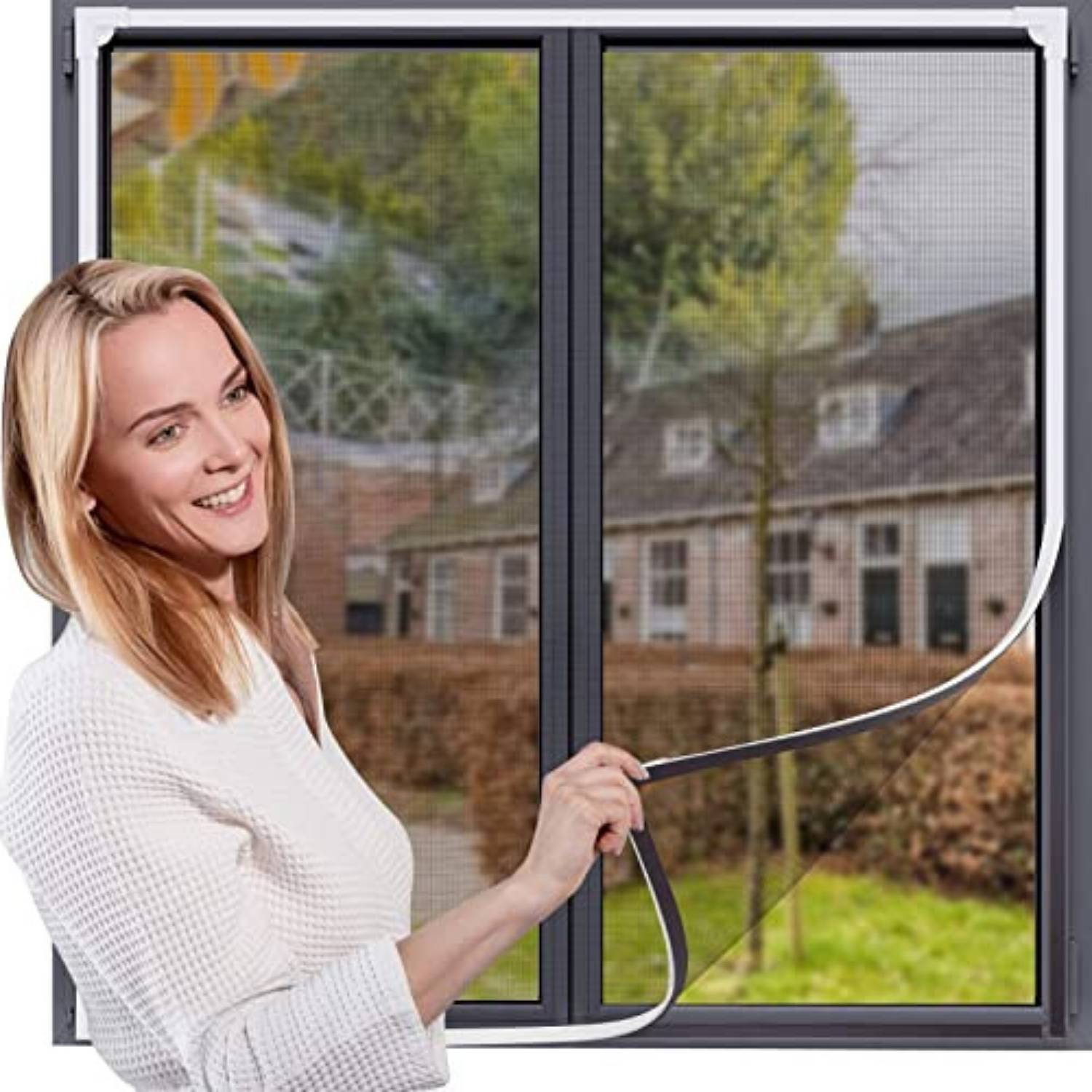

The complete guide
Fitting a magnetic window screen
Which size covers your window?
This kit covers an opening up to 100 cm wide and 100 cm tall, which suits a standard single window or a casement sash. Because you cut the frame down, the number to think about is a ceiling rather than an exact match. Order the kit above your opening and trim it. Order below it and there is nothing you can do.
Measure the frame recess rather than the glass. The magnetic strip sticks to the flat face of the frame around the opening, so that face is the surface the screen has to reach.
If your window is bigger than the largest kit in the range, ask for a quote before you order. These are made to size, so an unusual window is a measurement, not a dead end.
Choosing between the two meshes
This one comes in standard mesh (grey). Grey fibreglass woven 18 x 16 to the square inch, with 66% open area. It stops flies, mosquitoes and wasps and keeps the view and the breeze. Standard grey mesh is the one most people want. The weave is open enough that you barely notice it from inside, and it still stops everything that normally gets in through an open window.
If you're not sure, think about where you live rather than what is in the room. Near water, marshland or the coast, the smaller biting insects are the ones that ruin an evening, and ordinary fly screen lets them through. Away from all that, this grey mesh is the one to get. It is more open, so you see out better than you would through the tighter midge weave, and it handles the insects most houses actually get.
Fitting it
Wipe the frame face clean and let it dry, because the adhesive only gets one go at it. Run the magnetic strip around the opening. Cut the PVC frame to your measurements with a sharp blade or a strong pair of scissors, fit the four corner pieces, and trim the mesh. Press the screen onto the strip and it's done.
The first window takes about twenty minutes while you work out the order of things. After that they go up quickly. On an exposed window, fit the two wind clips as well, which stop the screen flexing in a gust.
Living with it
Opening the window is the part people ask about, and it's the part that decides whether a screen gets used. Pull the finger tab on a bottom corner, that corner lifts, you open or close the window, and letting go brings the screen back. No catches, nothing to unclip, nothing to store.
When it gets dusty, take the whole screen off and wash it with water and a little detergent, then let it dry fully before refitting. Keep the magnetic strip clear of grit so the screen keeps sitting flush. Some people leave them up all year and some take them down in autumn. Either works.
Why fibreglass mesh
The mesh is woven from glass yarn and coated in vinyl. It doesn't rust, corrode or stain, and it stays flexible rather than going brittle and splitting after a couple of summers, which is what kills cheap plastic netting. It's also non-combustible, which is worth knowing for a screen that sits in a window all summer.